





AMZ123跨境卖家导航
拖动LOGO到书签栏,立即收藏AMZ123
首页跨境头条文章详情

2021年澳大利亚知识产权报告!

IPRINTL
IPRINTL
2216
2021-04-30 18:56
2021-04-30 18:56
2216

INTRODUCTION概要

The Australian Intellectual Property Report provides the latest data on the intellectual property (IP) rights administered by the Australian Government. The report analyses the volume of applications for IP rights filed in Australia, the number of IP rights registered or granted, the geographical origins of applications, and the types of innovations for which applicants have sought protection.

2021年澳大利亚知识产权报告,由澳大利亚政府分析统计,旨在提供最新的知识产权相关数据。该报告分析了澳大利亚知识产权的申请量、获得注册或授权的知识产权数量、知识产权申请的原始国以及申请人寻求保护的创新类型等等。


In 2020, economic shocks associated with the COVID-19 pandemic and supply chain disruptions induced a sharp contraction in employment and output. This year’s IP Report documents some surprising trends in IP activity during this unprecedented crisis. Applications for patents and design rights fell by 2 and 4 per cent in 2020. In the case of designs, this decline can be attributed to a downturn in international trade, whereas the fall in patenting is due to a reduction in Australian filings. Conversely, trade mark applications increased by 8 per cent compared to 2019, driven by Australian applicants seeking increased trade mark protection.

2020年,COVID-19疫情爆发,经济遭到冲击,供应链中断导致就业和产出急剧收缩。今年的知识产权报告因这场史无前例的危机而呈现出一些出人意料的趋势。 2020年专利和外观设计申请量下降2-4%。就外观设计而言,申请量下降归因于国际贸易下滑,而专利申请量的下降则是由于澳大利亚申请量的减少。相反,受澳大利亚本地申请人寻求加强商标保护的推动,商标申请量较2019年增长了8%

Trade marks商标

Trade marks are informational signals that distinguish products, services and companies in the marketplace. Registering a trade mark insulates it from copying and infringement for an initial period of 10 years, but trade mark protection can be renewed indefinitely.

商标是区分市场中商品、服务以及各公司主体信息的一种标志。注册商标的最初保护期限为10年,且可通过续展无限延长。在商标保护期限内,可以避免他人未经许可或授权对注册商标进行模仿抄袭或其他侵权行为。

Trade mark applications and registrations商标申请和注册

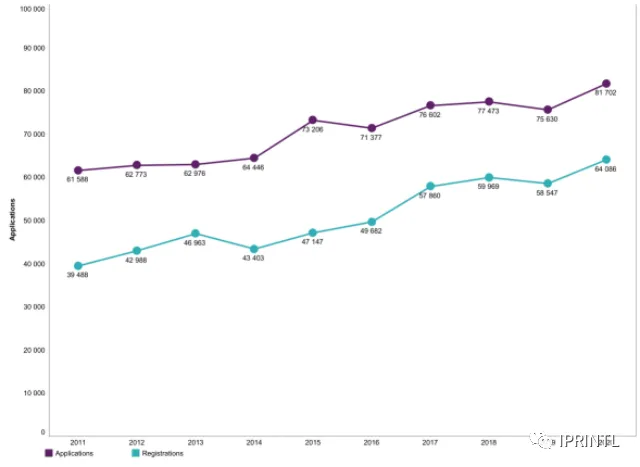
In 2020, a total of 81,702 trade mark applications were filed in Australia, an 8 percent increase on 2019. This increase occurred during the steepest fall in Australia’s gross domestic product (GDP) in history. This trend continued as Australia’s economy rebounded in the second half of 2020. 

2020年,澳大利亚商标申请量总共达81,702件,较2019年增长8%,这一增长发生在澳大利亚历史上国内生产总值(GDP)下降幅度最大的时期。随着2020年下半年澳大利亚经济反弹,商标申请量持续增长。


As with applications, trade mark registrations in Australia have risen with GDP over the past decade but continued to increase in 2020 even as GDP fell. Registrations reached 64,086, up 10 per cent on their level in 2019.

与商标申请相同,澳大利亚商标注册授权量在过去十年亦随着GDP增长而增加。即使2020GDP有所下降,但商标注册量仍持续增加。商标注册量达64,086件,较2019年同期增长10%。


Figure T1. Trade mark applications and registrations, 2011–20

图T1:2011年至2020年商标申请量和注册量
Resident and non-resident filings

本地和非本地商标申请

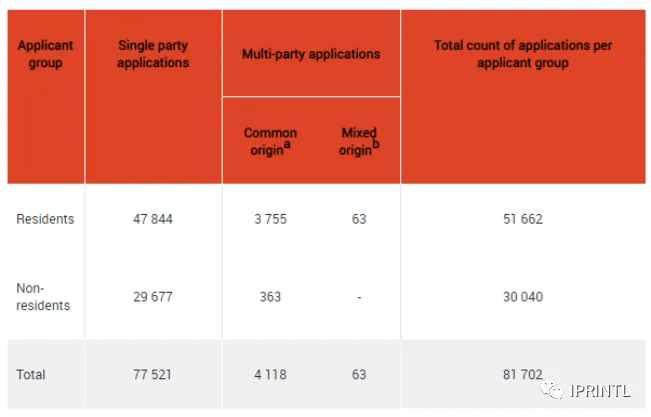
The growth in trade mark applications in Australia was due to growth in filings by Australian residents. In 2020, residents were named as applicants on 51,662 trade mark applications, up 17 per cent from 2019. Of these resident filings, 3,818 (or 7 per cent) were multi-party applications – most (3,755) coming from residents with Australian co-applicants only, the remaining (63) being mixed origin, with Australian and international co-applicants. The remaining 47,844 resident applications were from single Australian applicants (Table T1).

澳大利亚商标申请量的增加得益于澳大利亚本地申请量的增长。2020年,本地商标申请量达51,662件,较2019年增长17%。本地申请中,3,818件(占7%)为多方共同申请,其中大部分(3,755件)为澳大利亚本地共同申请,剩余(63件)为澳大利亚本地居民与跨国申请人共同申请。其余47,844件本地申请为澳大利亚单一主体申请(见表T1)。


In contrast, non-residents accounted for 30,040 applications in 2020, a 4 per cent fall from their level in 2019. The majority (29,677) came from single non-resident applicants, with a smaller number (363) from international co-applicants without involvement of Australian residents.

相比之下,2020年非本地申请达30,040件,较2019年同期下降4%。非本地申请中大部分(29,677件)为单一的非本地申请,剩余(363件)为国际共同申请(无澳大利亚本地居民参与)。


Table T1. Origin of single and multi-party trade mark applications, 2020

表T1:2020年单一和多方共同商标申请
Trade mark classes商标类别

Trade marks are attributed to specific product and service classes using Nice, an international classification scheme comprised of 45 classes. Applicants, who can nominate one or several Nice classes for their application, filed 148,104 classes in 2020, an average of 1.8 classes per application.

商标按国际尼斯分类(含45个类)划分为特定的商品和服务类别。申请人在同一个商标申请中可指定一个或多个类别。2020年商标申请共指定148,104个类别,平均每个商标申请指定1.8个类别。


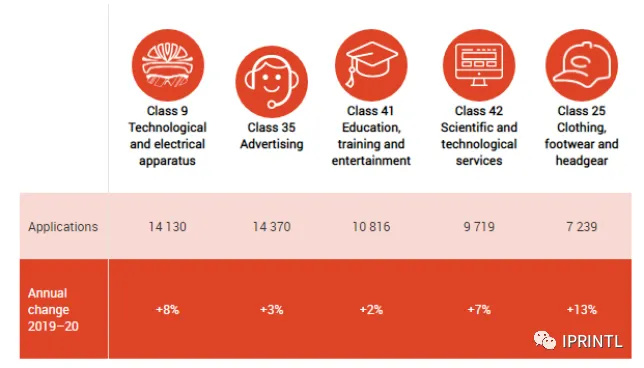
Since 2002, there has been relative stability in the degree to which trade mark applications are concentrated across classes, with five classes dominating for total filings (Table T2).

自2002年以来,商标申请在各个类别中的集中程度一直相对稳定,其中五个类别在总申请量中占主导地位:9类技术和电气设备、35类广告、41类教育,培训和娱乐、42类科技服务、25类服装,鞋类和头饰(见表T2)。


Table T2. Trade mark classes, top 5 in 2020

表T2:2020年排名前五位的商标申请类别

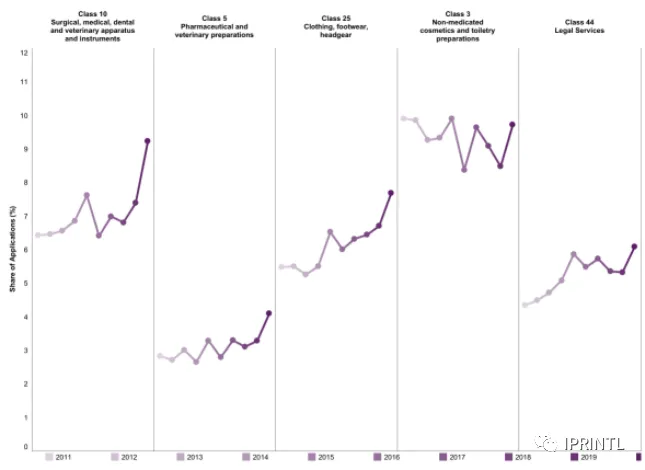
As shown in Figure T2, the greatest change in classes was observed for Surgical and medical apparatus (+23 per cent from 2019), Pharmaceutical and veterinary preparations (+23 per cent), Clothing and footwear (+13 per cent), Non-medicated cosmetics and toiletries (+13 per cent) and Legal services (+12 per cent). The classes with the highest rates of decline were Medical and veterinary services (–10 per cent) and Transport services (–9 per cent). These trends likely reflect the massive demand for products to help mitigate the COVID-19 pandemic and the uneven sectoral impacts of business restrictions intended to curb infection spread.

如下图T2所示,增幅最大的类别是手术和医疗设备(较2019年增长23%)、药品和兽药制剂(增长23%)、服装和鞋类(增长13%)、非医用化妆品和盥洗用品(增长13%)以及法律服务(增长12%)。下降幅度最大的类别是医疗和兽医服务(下降10%)和运输服务(下降9%)。这一趋势可反映出消费者对缓解COVID-19疫情所产生的巨大商品需求,以及政府为遏制疫情扩散而出台的商业限制令对各部门的不均衡影响。


Figure T2. Applications for trade marks related to medical and health care products and services increased in 2020

图T2:2020年与医疗保健产品和服务有关的商标申请量有所增加
States and territories澳大利亚各州和地区的商标申请量

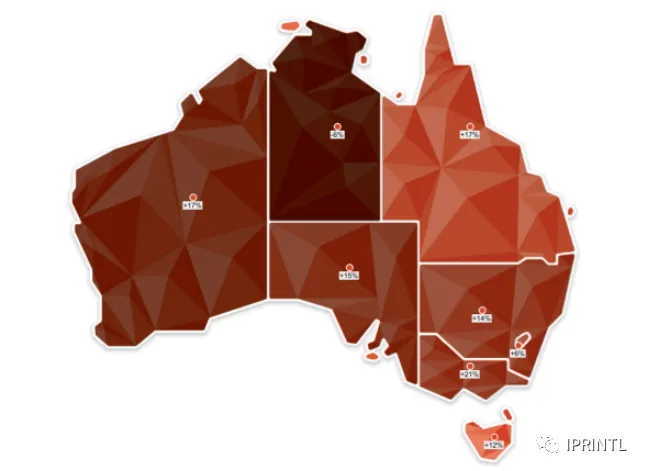
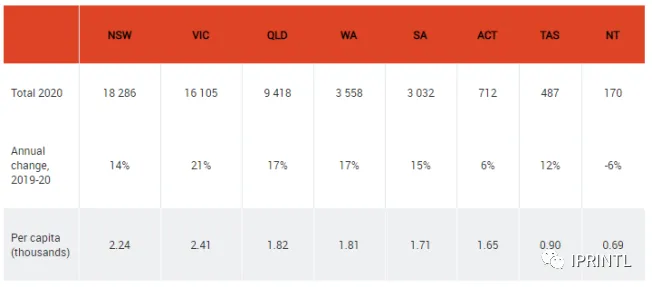
In 2020, trade mark applications increased from their levels in 2019 across all states and territories except the Northern Territory (Table T3). Applicants from New South Wales were named in the largest number of applications (18,286), followed by applicants from Victoria (named in 16,105 applications). Victorian applicants led for the most applications per capita (2.2 per thousand people), and for the highest rate of growth in applications (21 per cent) during 2020.

2020年,除北部地区外,澳大利亚其他州和地区的商标申请量较2019年同期均有所增长(见表T3)。新南威尔士州商标申请量名列第一(18,286件),其次是维多利亚州(16,105件)。维多利亚州的人均申请量最高(2.2/千人),是2020年申请量增幅最大的州(21%)。


Of the 51,662 resident applications in 2020, a total of 118 were filed by applicants in interstate partnerships. The most common interstate partnerships involved co-applicants from New South Wales and Queensland (28 applications), from New South Wales and Victoria (17 applications), and from Queensland and Victoria (17 applications).

2020年,澳大利亚本地商标申请51,662件,其中118件为州际合伙共同申请。最常见的州际合伙共同申请包括来自新南威尔士州和昆士兰州的共同申请人(28件申请)、来自新南威尔士州和维多利亚州的共同申请人(17件申请),以及来自昆士兰州和维多利亚州的共同申请人(17件申请)。


Table T3. Trade mark applications, states and territories, 2019–20

表T3:2019年至2020年澳大利亚各州和地区的商标申请情况

Countries of origin商标申请原始国

In 2020, as in every year since 2015, the major countries of origin for trade mark applicants (besides Australia) were the United States (US), China, the United Kingdom (UK), Germany and Japan. In total, 8,918 trade mark applications named US applicants, 4,815 named Chinese applicants, 2,215 named applicants from the UK, 1,709 named German applicants and 1,323 named applicants from Japan. Applications fell from their level in 2019 for all of these countries of origin except Japan, filings from which remained stable.

2020年商标申请主要原始国(澳大利亚除外)有:美国、中国、英国、德国和日本。自2015年以来,每年均是如此。商标申请总量中,8,918件来自美国申请人,4,815件来自中国申请人,2,215件来自英国申请人,1,709件来自德国申请人,1,323件来自日本申请人。除来自日本的商标申请量保持平稳增长外,其他几个国家的商标申请量较2019年同期均有所下降。


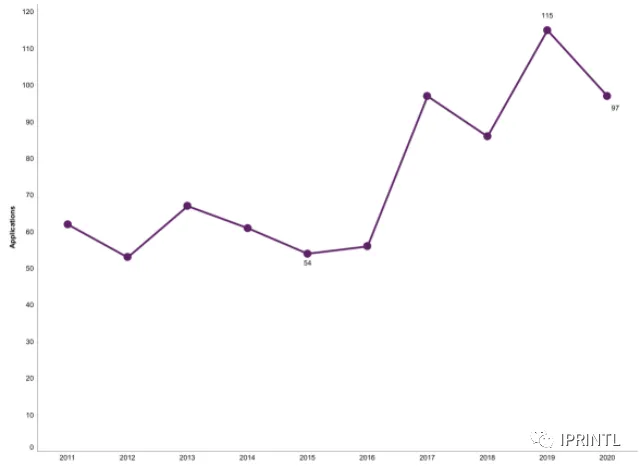
Of the 81,702 total applications filed in Australia, 97 named applicants from multiple countries. The most common international partnerships involved Australians filing with co-applicants from Hong Kong (16 applications), the US (15 applications) and China (7 applications).

澳大利亚商标申请总量81,702件,其中97件来自多个国家的共同申请人。最常见的国际共同申请包括澳大利亚本地居民与来自中国香港的共同申请人(16件)、与来自美国的共同申请人(15件)以及与来自中国的共同申请人(7件)。


Following a sustained period of growth in applications filed by international partnerships in 2015–19, international partnership applications fell in 2020 (Figure T3). The decline may reflect the volatility in international trade introduced by the COVID-19 pandemic.

伴随着2015至2019年以来商标国际共同申请持续增长之后,2020该数据却有所下降(见图T3)。 反映COVID-19疫情国际贸易带来的波动和影响。


Trade mark applications can be filed directly in Australia or via the Madrid system, which allows a single trade mark to be filed in multiple countries. In 2020, 16,872 trade mark applications in Australia were filed via this system, equating to 56 per cent of all non-resident applications.

申请人可直接向澳大利亚商标局提交商标申请也可以通过马德里体系进行申请(只需一份申请,便可指定多个国家)。2020年,通过马德里体系指定澳大利亚的商标申请达16,872,占所有非本地申请的56%。


Figure T3. After a period of sustained growth, trade mark applications filed by international partnerships fell in 2020

图T3:2020年商标国际共同申请在经过一段时间的持续增长之后呈现下降趋势

Australian filings overseas澳大利亚海外商标申请

Before the pandemic, trade mark applications filed by Australians overseas exhibited strong continuous growth. In 2019 (most recent WIPO data), Australian residents filed a total of 20,573 trade mark applications abroad. These contained 47,983 class nominations, up 10 per cent from 2018. The primary destination countries for these filings were China (19 per cent of all class nominations in applications abroad), the US (15 per cent), New Zealand (12 per cent) and the European Union Intellectual Property Office (6 per cent).  

COVID-19疫情之前,澳大利亚的海外商标申请呈现强劲的持续增长趋势。2019年(WIPO最新数据),澳大利亚本地居民提交了20,573件海外商标申请,指定商品或服务类别共47,983个,较2018年增长10%。海外商标申请的主要目标国家是中国(占海外申请所指定商品/服务类别的19%),美国占15%,新西兰占12%,欧盟占6%。


More analysis and data please refer to https://www.ipaustralia.gov.au/ip-report-2021, for patents, designs, copyrights, trademarks and exports in each chapter.

详情请参阅澳大利亚官网链接,报告分章节对商标、专利、版权、外观等数据进行了详尽地分析。

文章来源:IPRINTL
作者:WPIP-Kathy
编辑:WPIP-Bill                    
欢迎同行投稿,如需投稿,请投邮箱info@wpipcn.com
欢迎个人转发分享!刊物和机构如需转载,请联系授权事宜:13735514784(微信同号)龚小姐,请勿无授权转载,谢谢!

免责声明
本文链接:
本文经作者许可发布在AMZ123跨境头条,如有疑问,请联系客服。
最新热门报告作者标签
Lazada菲律宾电子产品GMV增长11倍,消费者购物更理性
AMZ123获悉,近日,Lazada菲律宾公布的双十二大促数据显示,菲律宾消费者的网购行为正在发生明显变化,相比冲动型下单,消费者更重视商品质量、正品保障和长期使用价值。这一变化表明,电商平台在节日购物季中的角色,正从“低价促销渠道”转向承载高价值、强信任型消费的重要场景。从具体数据来看,电子产品成为本次12.12期间表现最突出的品类,成交总额(GMV)较日常水平增长11倍。美妆和家居品类在LazMall(官方认证品牌专区)同样实现显著增长。Lazada指出,越来越多菲律宾家庭通过电商平台购买电子产品,包括智能设备、娱乐系统及日用家电,选购决策更强调耐用性与可靠性。
摩尔多瓦拟对跨境包裹征税,欧洲监管持续收紧
AMZ123获悉,近日,欧洲摩尔多瓦政府正推进针对跨境电商包裹的新一轮监管与征税措施,重点对象包括Temu、Shein、AliExpress等电商平台。据了解,摩尔多瓦政府正在与财政部制定新的法律和税收框架,以应对近年来跨境包裹数量激增以及由此带来的安全与公平竞争问题。摩尔多瓦政府表示,当前跨境小额包裹几乎处于“零监管、零税收”的状态,已难以持续。随着跨境电商迅速扩张,政府必须对该领域进行规范调整,不仅涉及经济层面的税收问题,也包括包裹内容的安全监管。政府指出,摩尔多瓦现行制度下,大量低价值商品进入国内市场,却缺乏明确的法律基础和有效审查机制,这在长期内对摩尔多瓦国家经济秩序和消费者安全构成风险。
快时尚冲击本土产业,拉美多国计划调整关税政策
AMZ123获悉,近日,随着中国超快时尚平台在拉美市场的迅速扩张,阿根廷、墨西哥、巴西、智利等多国立法机构和政府部门正计划或已推出针对中国超快时尚平台的进口限制和税收措施,试图保护本土纺织与服装产业。在全球范围内,Shein在2022年底至2023年底期间上线的新产品数量达到150万款,而Zara约为4万款、H&M约为2.3万款。市场研究机构Sensor Tower的数据显示,2025年上半年,Temu在拉丁美洲的月活跃用户同比增长143%,达到1.05亿。低价、快速上新和跨境直邮模式,使这些平台在拉美市场迅速占据份额。在阿根廷,Shein的受欢迎程度在近两年迅速攀升,尤其是在政府大幅放松进口管制之后。
扎心了,超7成跨境人今年无年终奖
年终奖取消,公司岌岌可危,跨境人:今年太难了
跨境电商的入场券,变了
2025年,跨境电商仍在增长,但增长的方式已悄然改写——它不再均匀洒向每一个卖家,而是像一场“定向灌溉”,愈发向头部与合规能力强的卖家集中。平台数据揭示出这一分化:2025年1—9月,亚马逊中国卖家上新数量同比提升近25%;销售额达到200万、500万、800万美元的卖家数量增幅均超过20%;而销售额超过1000万美元的头部卖家,增幅接近30%。这不是简单的强弱分化,而是一次行业的深层迁移:平台正在亲手改写规则,把“可控”定为第一要义。随之而来的,是三条谁都绕不开的趋势——它们共同把跨境电商,从过去的“流量快跑”,推向了如今的“系统耐力赛”。
25-cv-15218,可食用野生花卉海报版权维权进行时,跨境卖家注意TRO冻结风险!
本案是keith律所代理Botanical Arts Press LLC 针对其于2025年8月14获得美国版权认证的VA 2-458-669作品发起的版权维权案件
美国圣诞节后预计迎来退货高峰,退货率或将高出35%
AMZ123获悉,近日,Adobe最新发布的假日购物数据分析显示,2025年假日季至今,美国消费者的退货行为较去年同期有所放缓,但整体趋势仍需谨慎看待。11月1日至12月12日,线上购物退货量同比下降2.5%;而在黑五周(Cyber Week)结束后的7天内,退货量仅同比下降0.1%,降幅明显收窄。Adobe指出,当前的退货下降并不意味着假日季整体退货压力减轻。按照历史规律,圣诞节后将迎来集中退货高峰。预计12月26日至12月31日期间,退货量将较11月1日至12月12日这一阶段高出25%至35%。根据2024年假日季数据,每8笔退货中就有1笔发生在这一6天内,Adobe预计这一趋势将在今年延续。
11月波兰电商平台流量排名出炉,Allegro重返第一
AMZ123获悉,近日,Mediapane最新的l数据显示,波兰电商平台的流量排名在11月出现变化。波兰本土电商平台Allegro以1919万名用户重新夺回波兰电商访问量第一的位置,超过Temu的1910万名用户,结束了此前数月Temu持续领先的局面。对比来看,10月Temu仍明显领先,当月其用户规模达到1976万人,而Allegro为1897万人。Temu自今年3月首次超越Allegro后,连续多月位居榜首,但两者之间的用户差距始终不大。除Allegro和Temu外,11月的第三名为电子产品零售商Media Expert,用户规模为1340万人,较10月的1164万人明显增长。
抢攻新兴蓝海,一批中国卖家已爆单!
你眼中的非洲,是什么样的?偏远、贫瘠、基建差……在这些刻板印象的束缚下,过去很长一段时间里,许多卖家对于非洲的认知都停留在“待开发的潜力股”上,因此鲜少有人在攻略新城池时考虑到非洲电商市场。然而士别三日,当刮目相看。如今去到非洲国家,这样的场景已十分普遍:尼日利亚拉各斯的街头,电商配送车穿梭在车流中,装载着从中国跨境而来的电子产品与时尚服饰;在肯尼亚内罗毕的社区,年轻人正在Jumia的橙色自提点前排起长队,领取他们通过手机订购的中国商品。 这片被误解的电商新大陆,正在成为藏金纳银的财富洼地。
新入口曝光!亚马逊广告后台新增 Prompts(提示词)功能
今日分享「结合数据高效优化老品广告」
亚马逊如何结合竞价,优化广告位置表现
在亚马逊平台的标品运营中,流量结构的精准布局是决定 ASIN 成长效率与成熟期收益的核心要素之一。标品(如标准化 3C 配件、家居日用品等)具有用户决策链路短、搜索意图明确的特征,其流量资源的分配需高度聚焦于高转化曝光位。本文将系统解析适用于标品成长 / 成熟期 ASIN 的流量结构”,明确其逻辑框架、落地步骤与效果验证,为新人卖家提供可复用的运营范式。一、模式 1 的核心定义与适配场景模式 1 是针对标品成长 / 成熟期 ASIN设计的流量结构策略,其核心特征为 “三角形流量布局”—— 即通过资源倾斜,将大部分流量集中于 “搜索结果首页首位” 这一核心曝光位。
25年健康品牌TOP10榜单出炉,功能型健康产品爆火
AMZ123获悉,近日,AI 市场研究平台 Spate 基于 Google、TikTok 和 Instagram 的搜索与互动数据,对健康品牌的年度热度变化进行了统计,整理出 2025 年最受关注、同比增长最快的十大健康品牌。随着“长寿”“功能性健康”等议题持续升温,线上健康消费品牌的关注度在2025年显著提升。这些品牌主要集中在营养补充、功能性食品、运动营养和情绪健康等领域,反映出消费者在压力管理、肠道健康、能量补充和整体健康管理方面的需求持续扩大。数据显示,2025 年热度排名第一的品牌为 Goli,其年度“人气指数”增长达 15 亿次,同比提升 217%。
美国圣诞节后预计迎来退货高峰,退货率或将高出35%
AMZ123获悉,近日,Adobe最新发布的假日购物数据分析显示,2025年假日季至今,美国消费者的退货行为较去年同期有所放缓,但整体趋势仍需谨慎看待。11月1日至12月12日,线上购物退货量同比下降2.5%;而在黑五周(Cyber Week)结束后的7天内,退货量仅同比下降0.1%,降幅明显收窄。Adobe指出,当前的退货下降并不意味着假日季整体退货压力减轻。按照历史规律,圣诞节后将迎来集中退货高峰。预计12月26日至12月31日期间,退货量将较11月1日至12月12日这一阶段高出25%至35%。根据2024年假日季数据,每8笔退货中就有1笔发生在这一6天内,Adobe预计这一趋势将在今年延续。
德国对Temu展开反垄断调查,定价机制受关注
AMZ123获悉,近日,据外媒报道,德国联邦卡特尔局(Bundeskartellamt)已正式对Temu德国母公司Whaleco Technology Limited启动反垄断调查,重点审查其在平台运营中是否存在限制卖家定价自由的行为。该公司注册地位于爱尔兰都柏林,此次调查源于德国零售协会(HDE)于今年4月向监管机构提交的正式投诉。调查核心为Temu是否违反德国及欧盟层面的“卡特尔禁令”。相关法律明确禁止具有竞争限制效果的协议或行为,若构成违法,最高可处以企业年度营业额10%的高额罚款。德国监管机构怀疑,Temu通过其卖家合作条款,对入驻卖家的价格制定施加不当限制,从而削弱市场竞争。
亚马逊走9810退税模式的灵魂拷问!
亚马逊走9810退税模式的灵魂拷问!
Temu等中国平台持续增长,波兰卖家呼吁加强监管
AMZ123获悉,近日,波兰电子经济商会(e-Izba)的初步数据显示,随着超低价商品在波兰市场的迅速普及,来自中国的跨境电商平台正对当地电商行业形成持续压力。这一趋势正在改变波兰消费者的购物习惯,也加剧了本土电商企业在成本、合规和价格层面的竞争劣势,相关领域呼吁尽快推动监管层面的调整。波兰电子经济商会(e-Izba)的初步数据显示,2025年有超过80%的波兰网民表示曾访问过至少一家中国购物平台。相关趋势在整个欧盟范围内同样明显。数据显示,2025年2月至7月期间,Shein在欧洲的月均访问用户数达到1.457亿人,较此前六个月增加1520万人,增幅为11.6%。
《亚马逊生活日用品类攻略手册》PDF下载
作为日常生活不可或缺的重要组成,生活百货品类覆盖范围广泛,包括家居用品、家具、车用配件、户外装备、园艺 工具、运动器材、家装用品、厨房、玩具以及宠物用品等众多领域。这类产品不仅是满足基本生活所需,更体现了人们对美好生活的向往和追求。
《掘金泰国-市场洞察与战略机遇报告2025》PDF下载
随着全球经济一体化的加速,泰国作为东盟的核心枢纽,凭借其独特的地缘优势庞大的消费市场以及持续优化的营商环境,成为众多企业战略布局的重要目标。本报告深入剖析泰国市场的政策红利、消费趋势、产业机遇以及合规挑战,旨在为有志于开拓泰国市场的中国企业提供行动指南,助力企业在东盟这片充满活力的土地上把握机遇、应对挑战、!实现可持续发展。
《2025欧美假日购物季营销指南》PDF下载
2025年美国假日购物季零售额预计同比仅增长1.2%,总销售额约1.359万亿美元,虽仍保持正增长,但为2009年以来最低增速,市场正在步入低增长的新常态。
《2025年跨境电商东南亚市场进入战略白皮书》PDF下载
东南亚电商,正以惊人的速度复刻中国电商高速增长的黄金时代。2024年东南亚电商GMV达到1284亿美元,短短5年涨幅超过3倍。全球电商2024年GMV增幅最快的十大市场中,东南亚独占四席。东南亚是拥有约6.7亿人口的广阔市场,在现今全球关税的不确定性大格局下,因其电商基建完善,利好的贸易政策,和更高的年轻人口占比,成为跨境卖家生意拓张焦点之一。
《2025年TikTok Shop玩具品类行业报告(欧美站)》PDF下载
分析TikTok Shop美国市场、英国市场、西班牙市场、墨西哥市场等主流市场点短视频及直播电商数据,选取TikTok与玩具爱好品类相关的内容进行分析报告。
《2025 洗护品类趋势与创新洞察》PDF下载
本报告独特价值:将消费者的“行为结果”据),揭示消费者深层心理动机、并能精准预判未来增长机会
《亚马逊双轨增长指南》PDF下载
亚马逊以“以客户为中心”为核心理念,通过整合B2B与B2C的全渠道服务,帮助卖家实现“一店双拓”-- 一次上架,同步触达个人消费者与企业买家,获得双重收益。同时,基于Direct to Buyer(直接触达买家)的模式,更能有效减少中间环节,提升利润空间与品牌掌控力。
《亚马逊全球线上商采趋势与区域洞察》PDF下载
随着全球企业数字化转型的深入推进,B2B商采有望成为下一个万亿级别的蓝海市场然而,中国卖家在开拓海外企业商采市场时往往面临着一个关键挑战:难以准确把握海外企业买家的商采行为和决策模式。这种认知偏差不仅影响了产品开发方向,也制约了市场拓展策略的制定。
跨境电商赢商荟
跨境电商行业唯一一家一年365天不断更的媒体!
亿邦动力网
消除一切电商知识鸿沟,每日发布独家重磅新闻。
亚马逊资讯
AMZ123旗下亚马逊资讯发布平台,专注亚马逊全球热点事件,为广大卖家提供亚马逊最新动态、最热新闻。
跨境平台资讯
AMZ123旗下跨境电商平台新闻栏目,专注全球跨境电商平台热点事件,为广大卖家提供跨境电商平台最新动态、最热新闻。
AMZ123选品观察员
选品推荐及选品技巧分享。
AMZ123会员
「AMZ123会员」为出海者推出的一站式私享服务
跨境数据中心
聚合海量跨境数据,输出跨境研究智慧。
跨境学院
跨境电商大小事,尽在跨境学院。
首页
跨境头条
文章详情
2021年澳大利亚知识产权报告!
IPRINTL
2021-04-30 18:56
2215

INTRODUCTION概要

The Australian Intellectual Property Report provides the latest data on the intellectual property (IP) rights administered by the Australian Government. The report analyses the volume of applications for IP rights filed in Australia, the number of IP rights registered or granted, the geographical origins of applications, and the types of innovations for which applicants have sought protection.

2021年澳大利亚知识产权报告,由澳大利亚政府分析统计,旨在提供最新的知识产权相关数据。该报告分析了澳大利亚知识产权的申请量、获得注册或授权的知识产权数量、知识产权申请的原始国以及申请人寻求保护的创新类型等等。


In 2020, economic shocks associated with the COVID-19 pandemic and supply chain disruptions induced a sharp contraction in employment and output. This year’s IP Report documents some surprising trends in IP activity during this unprecedented crisis. Applications for patents and design rights fell by 2 and 4 per cent in 2020. In the case of designs, this decline can be attributed to a downturn in international trade, whereas the fall in patenting is due to a reduction in Australian filings. Conversely, trade mark applications increased by 8 per cent compared to 2019, driven by Australian applicants seeking increased trade mark protection.

2020年,COVID-19疫情爆发,经济遭到冲击,供应链中断导致就业和产出急剧收缩。今年的知识产权报告因这场史无前例的危机而呈现出一些出人意料的趋势。 2020年专利和外观设计申请量下降2-4%。就外观设计而言,申请量下降归因于国际贸易下滑,而专利申请量的下降则是由于澳大利亚申请量的减少。相反,受澳大利亚本地申请人寻求加强商标保护的推动,商标申请量较2019年增长了8%

Trade marks商标

Trade marks are informational signals that distinguish products, services and companies in the marketplace. Registering a trade mark insulates it from copying and infringement for an initial period of 10 years, but trade mark protection can be renewed indefinitely.

商标是区分市场中商品、服务以及各公司主体信息的一种标志。注册商标的最初保护期限为10年,且可通过续展无限延长。在商标保护期限内,可以避免他人未经许可或授权对注册商标进行模仿抄袭或其他侵权行为。

Trade mark applications and registrations商标申请和注册

In 2020, a total of 81,702 trade mark applications were filed in Australia, an 8 percent increase on 2019. This increase occurred during the steepest fall in Australia’s gross domestic product (GDP) in history. This trend continued as Australia’s economy rebounded in the second half of 2020. 

2020年,澳大利亚商标申请量总共达81,702件,较2019年增长8%,这一增长发生在澳大利亚历史上国内生产总值(GDP)下降幅度最大的时期。随着2020年下半年澳大利亚经济反弹,商标申请量持续增长。


As with applications, trade mark registrations in Australia have risen with GDP over the past decade but continued to increase in 2020 even as GDP fell. Registrations reached 64,086, up 10 per cent on their level in 2019.

与商标申请相同,澳大利亚商标注册授权量在过去十年亦随着GDP增长而增加。即使2020GDP有所下降,但商标注册量仍持续增加。商标注册量达64,086件,较2019年同期增长10%。


Figure T1. Trade mark applications and registrations, 2011–20

图T1:2011年至2020年商标申请量和注册量

Resident and non-resident filings

本地和非本地商标申请

The growth in trade mark applications in Australia was due to growth in filings by Australian residents. In 2020, residents were named as applicants on 51,662 trade mark applications, up 17 per cent from 2019. Of these resident filings, 3,818 (or 7 per cent) were multi-party applications – most (3,755) coming from residents with Australian co-applicants only, the remaining (63) being mixed origin, with Australian and international co-applicants. The remaining 47,844 resident applications were from single Australian applicants (Table T1).

澳大利亚商标申请量的增加得益于澳大利亚本地申请量的增长。2020年,本地商标申请量达51,662件,较2019年增长17%。本地申请中,3,818件(占7%)为多方共同申请,其中大部分(3,755件)为澳大利亚本地共同申请,剩余(63件)为澳大利亚本地居民与跨国申请人共同申请。其余47,844件本地申请为澳大利亚单一主体申请(见表T1)。


In contrast, non-residents accounted for 30,040 applications in 2020, a 4 per cent fall from their level in 2019. The majority (29,677) came from single non-resident applicants, with a smaller number (363) from international co-applicants without involvement of Australian residents.

相比之下,2020年非本地申请达30,040件,较2019年同期下降4%。非本地申请中大部分(29,677件)为单一的非本地申请,剩余(363件)为国际共同申请(无澳大利亚本地居民参与)。


Table T1. Origin of single and multi-party trade mark applications, 2020

表T1:2020年单一和多方共同商标申请

Trade mark classes商标类别

Trade marks are attributed to specific product and service classes using Nice, an international classification scheme comprised of 45 classes. Applicants, who can nominate one or several Nice classes for their application, filed 148,104 classes in 2020, an average of 1.8 classes per application.

商标按国际尼斯分类(含45个类)划分为特定的商品和服务类别。申请人在同一个商标申请中可指定一个或多个类别。2020年商标申请共指定148,104个类别,平均每个商标申请指定1.8个类别。


Since 2002, there has been relative stability in the degree to which trade mark applications are concentrated across classes, with five classes dominating for total filings (Table T2).

自2002年以来,商标申请在各个类别中的集中程度一直相对稳定,其中五个类别在总申请量中占主导地位:9类技术和电气设备、35类广告、41类教育,培训和娱乐、42类科技服务、25类服装,鞋类和头饰(见表T2)。


Table T2. Trade mark classes, top 5 in 2020

表T2:2020年排名前五位的商标申请类别


As shown in Figure T2, the greatest change in classes was observed for Surgical and medical apparatus (+23 per cent from 2019), Pharmaceutical and veterinary preparations (+23 per cent), Clothing and footwear (+13 per cent), Non-medicated cosmetics and toiletries (+13 per cent) and Legal services (+12 per cent). The classes with the highest rates of decline were Medical and veterinary services (–10 per cent) and Transport services (–9 per cent). These trends likely reflect the massive demand for products to help mitigate the COVID-19 pandemic and the uneven sectoral impacts of business restrictions intended to curb infection spread.

如下图T2所示,增幅最大的类别是手术和医疗设备(较2019年增长23%)、药品和兽药制剂(增长23%)、服装和鞋类(增长13%)、非医用化妆品和盥洗用品(增长13%)以及法律服务(增长12%)。下降幅度最大的类别是医疗和兽医服务(下降10%)和运输服务(下降9%)。这一趋势可反映出消费者对缓解COVID-19疫情所产生的巨大商品需求,以及政府为遏制疫情扩散而出台的商业限制令对各部门的不均衡影响。


Figure T2. Applications for trade marks related to medical and health care products and services increased in 2020

图T2:2020年与医疗保健产品和服务有关的商标申请量有所增加

States and territories澳大利亚各州和地区的商标申请量

In 2020, trade mark applications increased from their levels in 2019 across all states and territories except the Northern Territory (Table T3). Applicants from New South Wales were named in the largest number of applications (18,286), followed by applicants from Victoria (named in 16,105 applications). Victorian applicants led for the most applications per capita (2.2 per thousand people), and for the highest rate of growth in applications (21 per cent) during 2020.

2020年,除北部地区外,澳大利亚其他州和地区的商标申请量较2019年同期均有所增长(见表T3)。新南威尔士州商标申请量名列第一(18,286件),其次是维多利亚州(16,105件)。维多利亚州的人均申请量最高(2.2/千人),是2020年申请量增幅最大的州(21%)。


Of the 51,662 resident applications in 2020, a total of 118 were filed by applicants in interstate partnerships. The most common interstate partnerships involved co-applicants from New South Wales and Queensland (28 applications), from New South Wales and Victoria (17 applications), and from Queensland and Victoria (17 applications).

2020年,澳大利亚本地商标申请51,662件,其中118件为州际合伙共同申请。最常见的州际合伙共同申请包括来自新南威尔士州和昆士兰州的共同申请人(28件申请)、来自新南威尔士州和维多利亚州的共同申请人(17件申请),以及来自昆士兰州和维多利亚州的共同申请人(17件申请)。


Table T3. Trade mark applications, states and territories, 2019–20

表T3:2019年至2020年澳大利亚各州和地区的商标申请情况

Countries of origin商标申请原始国

In 2020, as in every year since 2015, the major countries of origin for trade mark applicants (besides Australia) were the United States (US), China, the United Kingdom (UK), Germany and Japan. In total, 8,918 trade mark applications named US applicants, 4,815 named Chinese applicants, 2,215 named applicants from the UK, 1,709 named German applicants and 1,323 named applicants from Japan. Applications fell from their level in 2019 for all of these countries of origin except Japan, filings from which remained stable.

2020年商标申请主要原始国(澳大利亚除外)有:美国、中国、英国、德国和日本。自2015年以来,每年均是如此。商标申请总量中,8,918件来自美国申请人,4,815件来自中国申请人,2,215件来自英国申请人,1,709件来自德国申请人,1,323件来自日本申请人。除来自日本的商标申请量保持平稳增长外,其他几个国家的商标申请量较2019年同期均有所下降。


Of the 81,702 total applications filed in Australia, 97 named applicants from multiple countries. The most common international partnerships involved Australians filing with co-applicants from Hong Kong (16 applications), the US (15 applications) and China (7 applications).

澳大利亚商标申请总量81,702件,其中97件来自多个国家的共同申请人。最常见的国际共同申请包括澳大利亚本地居民与来自中国香港的共同申请人(16件)、与来自美国的共同申请人(15件)以及与来自中国的共同申请人(7件)。


Following a sustained period of growth in applications filed by international partnerships in 2015–19, international partnership applications fell in 2020 (Figure T3). The decline may reflect the volatility in international trade introduced by the COVID-19 pandemic.

伴随着2015至2019年以来商标国际共同申请持续增长之后,2020该数据却有所下降(见图T3)。 反映COVID-19疫情国际贸易带来的波动和影响。


Trade mark applications can be filed directly in Australia or via the Madrid system, which allows a single trade mark to be filed in multiple countries. In 2020, 16,872 trade mark applications in Australia were filed via this system, equating to 56 per cent of all non-resident applications.

申请人可直接向澳大利亚商标局提交商标申请也可以通过马德里体系进行申请(只需一份申请,便可指定多个国家)。2020年,通过马德里体系指定澳大利亚的商标申请达16,872,占所有非本地申请的56%。


Figure T3. After a period of sustained growth, trade mark applications filed by international partnerships fell in 2020

图T3:2020年商标国际共同申请在经过一段时间的持续增长之后呈现下降趋势
Australian filings overseas澳大利亚海外商标申请

Before the pandemic, trade mark applications filed by Australians overseas exhibited strong continuous growth. In 2019 (most recent WIPO data), Australian residents filed a total of 20,573 trade mark applications abroad. These contained 47,983 class nominations, up 10 per cent from 2018. The primary destination countries for these filings were China (19 per cent of all class nominations in applications abroad), the US (15 per cent), New Zealand (12 per cent) and the European Union Intellectual Property Office (6 per cent).  

COVID-19疫情之前,澳大利亚的海外商标申请呈现强劲的持续增长趋势。2019年(WIPO最新数据),澳大利亚本地居民提交了20,573件海外商标申请,指定商品或服务类别共47,983个,较2018年增长10%。海外商标申请的主要目标国家是中国(占海外申请所指定商品/服务类别的19%),美国占15%,新西兰占12%,欧盟占6%。


More analysis and data please refer to https://www.ipaustralia.gov.au/ip-report-2021, for patents, designs, copyrights, trademarks and exports in each chapter.

详情请参阅澳大利亚官网链接,报告分章节对商标、专利、版权、外观等数据进行了详尽地分析。

文章来源:IPRINTL
作者:WPIP-Kathy
编辑:WPIP-Bill                    
欢迎同行投稿,如需投稿,请投邮箱info@wpipcn.com
欢迎个人转发分享!刊物和机构如需转载,请联系授权事宜:13735514784(微信同号)龚小姐,请勿无授权转载,谢谢!

咨询
官方微信群
官方客服

扫码添加,立即咨询

加群
官方微信群
官方微信群

扫码添加,拉你进群

更多
订阅号服务号跨境资讯
二维码

为你推送和解读最前沿、最有料的跨境电商资讯

二维码

90% 亚马逊卖家都在关注的微信公众号

二维码

精选今日跨境电商头条资讯

回顶部